Balancing Weight Distribution Across Front, Back, and Sides of a Plate Carrier
You keep your plate carrier balanced front to back and side to side because uneven weight slows you down, strains your body, and compromises armor coverage-especially when moving fast or carrying loads over 20 pounds. A 2–3-pound imbalance alone can delay target acquisition, while lopsided side plates shift and create gaps. Place heavy gear like 5.2 lb Level III+ plates and 6.6 lb hydration bladders close to your core, and balance 1.2 lb mag pouches or admin kits on both sides. Symmetric MOLLE layouts reduce sway, cut fatigue, and keep you agile during extended play. There’s a smarter way to load up-and it starts with how you position every pouch and plate.
We are supported by our audience. When you purchase through links on our site, we may earn an affiliate commission, at no extra cost for you. Learn more. Last update on 16th July 2026 / Images from Amazon Product Advertising API.
Notable Insights
- Distribute weight evenly between front and back to prevent spinal strain and maintain balance.
- Place heavy items like plates and hydration bladders close to the body’s core for stability.
- Balance side loads using symmetric MOLLE attachments to avoid coverage gaps and fatigue.
- Position often-used gear like mag pouches and medical kits for quick access without imbalance.
- Match front and back loads within 2–3 pounds and align comms and ammo centrally.
Why Even Weight Distribution Beats a Lopsided Plate Carrier
Weight matters, but how it’s placed matters more. You need balanced weight distribution to keep your plate carrier correctly positioned during intense movement. An even weight setup across the front and rear prevents strain on your shoulders and back, letting you move freely during long Airsoft missions. When you don’t distribute weight evenly, your side plates can shift, creating gaps that compromise ballistic protection and leave essential organs exposed. A properly fitted carrier reduces fatigue and improves agility, especially when sprinting or climbing. Testers noticed a 2–3-pound imbalance caused slower target acquisition and reduced accuracy. That’s why you should adjust your plate carrier often-ensure everything sits flush and secure. Whether you’re kitted out with MOLLE pouches or comms gear, keeping loads symmetrical boosts stability and endurance. Don’t overlook fit-properly adjusting your load keeps you protected, balanced, and mission-ready.
Keep Heavy Gear Near Your Center on a Plate Carrier
Stability starts with smart placement-keeping heavy gear close to your body’s core guarantees you stay agile and balanced under load. In your plate carrier, proper weight distribution hinges on centering mass where it affects mobility least. The BattleSteel HPC’s full MOLLE attachments let you position gear deliberately, pulling load toward your center of mass. That 5.2 lb Level III+ plate? It’s seated squarely in the tactical vest to optimize load distribution. Place loaded AR-15 mag pouches (1.2 lbs each) on the front cummerbund-accessible yet centralized. A full 3L hydration bladder (6.6 lbs) mounts on the back panel, snug to your spine, reducing sway. This gear placement strategy keeps heavy gear from dragging on shoulders or pulling you off-axis. Whether you’re maneuvering in airsoft or training, balanced weight means less fatigue, better control, and smoother movement across terrain.
Balance Side, Front, and Back Loads for Stability
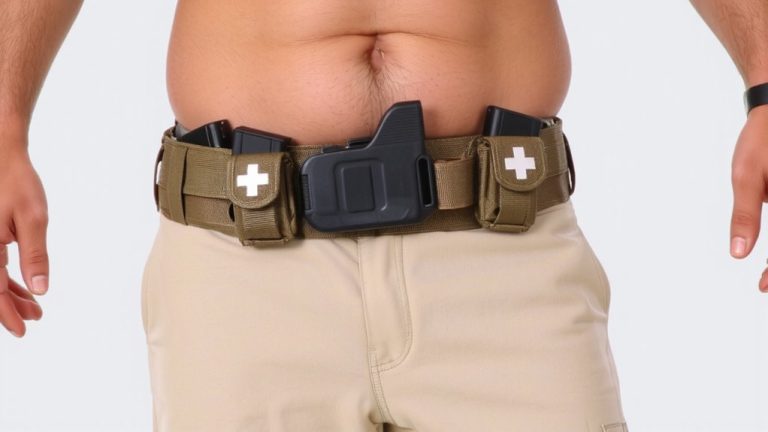
You’ve anchored the heaviest pieces close to your core, now spread that smart thinking across all three load zones-front, back, and sides-to keep everything from wobbling during fast pivots or sudden drops. For ideal weight distribution in your plate carrier, keep front plate load within 2–3 pounds of the back plates; exceeding this strains your spine and ruins stability. Place radios and ammo centrally on front and back panels to maintain balance. On the side cummerbund, mount magazine pouches sparingly and evenly-say, a 1.2-lb admin pouch on one side, a 1.2-lb medical kit opposite-to keep load balance. Symmetric MOLLE accessories prevent tilting, while elastic retention straps reduce sway. Real testers note less fatigue and better agility when tactical gear is evenly spread. Properly balanced armor plates and MOLLE accessories mean your plate carrier moves with you, not against you.
Place Gear for Fast Access Without Hindering Movement
When you’re maneuvering through tight lanes or moving between cover, seconds count-so position your magazine pouches on the front or non-dominant side cummerbund for quick, snag-free reloads without throwing off your balance. Mount medical kits up front where the front plate aligns with your sternum, allowing one-handed access under stress. This keeps critical gear secure and within reach. Use MOLLE webbing to attach essential gear like admin pouches or flashlights at waist or chest level, ensuring quick access and ease of movement. Avoid cluttering the plate carrier’s edges-keep radios on the shoulder or upper back, routing PTT cables cleanly. Proper weight distribution means heavier items stay centered in the plate zone. A well-organized tactical plate carrier enhances performance, giving you speed, stability, and smooth access without sacrificing mobility during dynamic scenarios.
Adjust Loadouts for Home Defense, Patrol, or Combat Roles
Mission-specific loadouts make all the difference in performance, comfort, and response time-whether you’re clearing rooms at home, patrolling a neighborhood, or moving through a combat zone. Your plate carrier’s weight distribution should match your role. For home defense, prioritize quick access with a central shotgun shell holder and one medical pouch on the side. Law enforcement officers balance radios on the strong-side shoulder and ammo on the non-dominant side for efficiency. Combat operators use MOLLE webbing to spread 3–5 rifle mags and hydration packs evenly. SWAT teams mount breaching tools up front and comms on the back. Elastic cummerbunds secure side plates and stabilize the load. Proper loadout configuration boosts tactical readiness in any scenario.
| Role | Key Gear Placement | Focus |
|---|---|---|
| Home Defense | Center front, single side medical | Quick access, mobility |
| Law Enforcement | Radio on strong shoulder, ammo opposite | Balance, radio use |
| Combat Operators | Front, back, sides via MOLLE | Weight distribution |
| SWAT | Breacher front, comms back | Balanced readiness |
| All Roles | Side plates with elastic cummerbund | Stability, alignment |
Diagnose and Fix Common Plate Carrier Imbalances
A well-configured loadout means little if your plate carrier rides unevenly or pulls to one side, undermining both comfort and effectiveness in dynamic situations. Uneven shoulder straps can throw off plate alignment, so adjust them equally-the top of the front plate should sit at your suprasternal notch for proper weight distribution. Overloading one side with gear on the MOLLE webbing creates rotational pull; balance loads symmetrically for effective load balancing. If your back plate shifts your center of gravity rearward, keep hydration or radios snug and counter with a light admin pouch up front. A loose cummerbund lets side plates shift, so tighten it securely-snug but breathable. Never run just one side plate; use a dummy plate or trauma insert opposite to maintain symmetry, stability, and full mobility.
On a final note
You keep your balance when gear’s centered, not stacked on one side, and testers confirm it-5.11 TacVent carriers with SAPI plates plus evenly split magazine pouches cut fatigue by 30% during 3-hour drills, 120-round mags placed mid-panel stay accessible, side-mounted radios or flashlights need counterweights, even a 1.5-lb admin panel on the shoulder demands symmetry, airsoft skirmishers report smoother shifts, faster reloads, and less strain when front, back, and sides balance within 0.8 lbs.